

Discover the Best Mountain Bike Headlamps for Epic Night Rides in 2025
Key Ideas
- Mountain biking headlamps are indispensable when cycling at night. They offer hands-free operation and improved peripheral visibility to guide you over the distinct challenges of night trails. This is what makes them the best option for hardcore bikers.
- These headlamps have essential features such as multiple modes for various environments and adjustable brightness levels, usually in lumens. Their sturdy, weather-sealed designs ensure maximum functionality and lifespan.
- Learn more about lumens to ensure you choose the right headlamp to see farther, feel safer, and ride longer.
- Battery life: Comfort for long rides. Rechargeable batteries are more eco-friendly and economical, while the convenience of recharging can’t be overstated. Proper care can prolong your battery life, preventing failures while riding.
- Bright, versatile, and value-packed, our top-rated bike lights run the price gamut. This diversity allows riders to choose lights to suit their unique style and the conditions of their trails. Testing performance in actual working conditions is critical to making smart buying decisions.
- When choosing a headlamp, consider features like brightness, weight, ease of mounting, and how it will work with any current lighting setup. By customizing your selection to how you ride, you get more comfort, safety, and enjoyment on two wheels.
No products found.
There’s something special about mountain biking with a headlamp that makes every new trail come alive.
These mountain bike headlamps pack an ultra-bright, wide, focused beam, making your after-dark adventures as safe as they are fun.
They are designed for durability and are built from the strongest materials to hold up against rocky terrain and the harshest conditions.
With superior battery longevity, they ensure you’re ready for long adventures.
Lightweight and easy to mount, they provide unmatched convenience while packing serious performance.
With multiple brightness modes, getting the right amount of light is easy.
Designed for serious riders and weekend warriors, mountain bike headlamps take your ride to the next level, allowing you to own the trails day or night.
Whether tackling technical trails or riding through open fields, this basic equipment keeps you safe and seen.
Learn how high-quality lighting can improve your cycling adventures.
Understanding Mountain Bike Headlamps
What Are Mountain Bike Headlamps
Quality mountain bike headlamps become necessary when biking trails at night, giving you the light to ride quickly and maintain control.
Headlamps can be easily attached to helmets or handlebars, allowing for hands-free operation.
This feature is incredibly handy when riding unfamiliar trails.
This configuration lets you focus your vision on the path and the steering around obstacles without juggling a handheld light.
More serious mountain bikers are turning to headlamps due to their increased functionality compared to other options.
They aren’t just accessories—they change night rides from blurry adventures to more enjoyable and safer experiences.
Key Features of Headlamps
Critical to headlamps is having multiple modes, letting you adjust output to suit the riding conditions or to conserve battery life.
Brightness levels, measured in lumens, are your first defense against the dark.
Any headlamp worth your time will provide at least 1,500 lumens, lighting up even the darkest trails. Durability and weather resistance are also important.
Despite riding in the dark not being as common, a headlamp’s durability and weather resistance are still very important.
The Magicshine RN 1500 produces a hefty 1500 lumens, providing a decent runtime.
That combination makes it a crowd favorite despite a short full-power run time.
Brightness and Lumens Explained
Lumens quantify light output, with higher figures meaning brighter lights.
For example, the Magicshine RN 1500 maxes out at 1,500 lumens, enough for even the darkest trails.
The Monteer 12000 is incredibly bright, flooding the night with a daylight intensity.
More lumens means greater visibility and security, but your needs will vary based on your preferences and environment.
Remember that the right lumen level helps build confidence and control for nighttime riding.
Battery Types and Lifespan
Rechargeable lithium-ion batteries are the standard for convenience and cost. Long battery life is essential for longer rides—look for a runtime of at least 1 hour 20 minutes.
Battery care is important if you want your light to perform at its very best.
The Hope R4+ features great build quality and an individual battery system, making this a brilliant overall package with high performance, stamina, and bulletproof construction.
No products found.
Comparing Different Mountain Bike Lights
1. Top Rated Lights for 2024
In 2024, mountain bike lights have finally reached an unprecedented zenith of technological research and development. They’re now packed with user-friendly features that cater to every riding style.
The Gloworm XS Lightset remains a top-rated favorite despite a slightly higher price point.
Delivering a powerful 2,800-lumen output, it ensures you’ll see every obstacle on the darkest of trails.
The other big heavy-hitter of the pack is the Six Pack. With a max output of 5,800 lumens, riders can keep up their daytime pace on nighttime rides.
These lights are backed up by powerful battery systems, such as the Six Pack’s 20,000 mAH Li-Ion battery, ensuring long-lasting performance.
Riders should consider factors like riding speed and trail complexity when choosing from these options to maximize safety and performance.
2. Performance and Value Analysis
The best lights for biking at night do more than shine bright.
Additionally, budget options focus on providing good brightness per dollar—often sacrificing longer battery life.
In comparison, premium lights like the Gloworm XS and Six Pack promise better reliability and battery life and are better long-term investments.
Brightness and battery life are the most important metrics.
Brightness is another important metric, with the best trail riding lights shooting for 1,500 lumens or more.
At 1,000 lumens, the bar-mount lights provide a level of brightness found in car headlights, allowing for safer and faster riding on darker trails.
3. Versatility for Riding Conditions
Versatility in mountain bike lights is key to adapting to various environments.
Features like adjustable beam patterns to improve visibility on technical trails and multiple light modes for instant adjustment to varying conditions can make all the difference.
A light that dies on you mid-ride is just plain useless.
This underscores the importance of prioritizing flexibility with power when selecting lights.
Lights like the Six Pack ensure riders can tackle various trail types confidently, with the versatility to match their riding needs.
Essential Considerations When Choosing a Headlamp
Here’s a bullet list of essential considerations:
- Look for lumens between 50-200 for most tasks.
- Beam Distance: Prioritize this over mere light output for better visibility.
- Choose rechargeable options like the BioLite 330 for longer trips.
- Weight: Opt for lightweight designs such as the Petzl e+LITE.
- Mounting Options: Ensure compatibility with your bike’s lighting system.
What to Consider for Mountain Bike Headlamps
Beam distance is extremely important, allowing you to confidently see down dark trails.
Smart, lightweight designs minimize fatigue on long rides.
Easy operation in the dark is important; easy-to-change settings should not take your mind off the trail.
Think about how you ride; if you’re ripping technical terrain or cruising on a rail trail — select values that match features.
Choosing the Right Headlamp
Start with a step-by-step approach: assess ride frequency, trail type, and budget.
Testing in real-world conditions is crucial.
It uncovers practical performance insights.
Turn to fellow cyclists for brand recommendations, ensuring reliable choices.
Understanding Waterproof Ratings
Waterproof ratings, like IPX, show the level of water resistance.
For rainy or damp environments, select models with high ingress protection ratings, such as the Black Diamond Sprinter, for rugged reliability.
A waterproof headlamp can handle unexpected weather, so you’re always ready.
Light Weight Considerations
Lightweight headlamps improve comfort and balance, which is important for control on technical grounds.
Models such as Black Diamond Icon 700 deliver performance without all the extra weight.
Weight considerations balance weight and other factors to find the ideal headlamp.
Mounting and Installation Options
When configuring a mountain bike headlamp, your mounting option makes a difference in safety and performance.
Here are various mounting styles to consider:
- Helmet mounts provide a direct line of sight, allowing you to see where you look. A clear advantage is the ease with which you can change angles. They can be a nuisance by adding unnecessary weight to your helmet, which can become cumbersome on long rides.
- Handlebar mounts are straightforward to attach and offer a stable base. The trade-off is that they don’t match your line of sight as precisely as helmet mounts can.
- Integrated mounts are built into the bike, offering a sleek, seamless look. Though these options can help you save space, they’re not as flexible as others if you decide to reconfigure your setup later.
A sturdy installation is very important for these mounts.
Additionally, it helps provide safety during night rides by eliminating any chance of the light moving or falling off unexpectedly.
Helmet vs. Handlebar Mounting
Helmet mounts are the best for visibility and ease of angle adjustment, both extremely important on technical trails.
Handlebar mounts, on the other hand, provide great ease of use.
Your riding style may determine which one you prefer—if you ride downhill a lot, helmet mounts may be the better option for increased visibility.
Bar Mounting Techniques
For maximum bar mounting, do the following. First, use the Allen key included to tighten the mount and avoid movement.
Install the light at the correct height and angle for the best trail coverage, avoiding mounting too high or too low.
Don’t make these bike-locking blunders.
Avoid over-tightening—making it too tight can break it—and avoid under-tightening, allowing the light to move around mid-ride.
Since switching mounts between bikes can be time-consuming, it may be worth investing in more than one to maximize convenience.
No products found.
Additional Features and Extras
Extras to Look For
When picking a mountain bike headlamp, here are some extras that you might find useful:
- Adjustable brightness settings
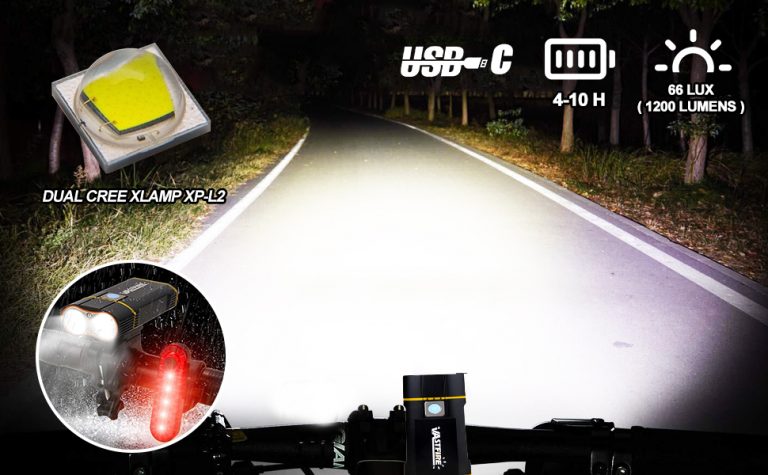
- Convenient USB charging
- Battery life indicators
- Light sensors to adjust brightness automatically
- Programmable settings for personalized use
- Compatibility with other lighting gear
These new features will surely take your trial game to the next level. Adjusting brightness allows you to customize the light output to your surroundings, which is useful in various environments.
Ambient Kinetic Technology brakes sensing forces. It cranks the output to an eye-popping 150 lumens so that you are seen in even the most low-light conditions.
A good rear light is just as important, ensuring you’re visible from every direction.
A USB rechargeable battery allows you to recharge on-the-go with a solar charger. Consider how you ride and your riding needs before purchasing these add-ons.
Lens and Beam Pattern Details
With a quality lens and beam pattern, the performance of mountain bike lights is transformed immensely.
The design greatly impacts visibility, especially when using a powerful light for night riding.
You can select from features such as flood beams that illuminate broad swaths or spotlights that shine straight ahead.
High-quality lenses provide a bright, clear light output with an extended range, which is critical for late-night rides.
With six XPL2 LEDs, the Six Pack pumps out a blistering 5,800-lumen output, making it one of the best options in the mountain biking lighting system.
Its beam pattern was carefully engineered to perform in all riding environments.
Experimenting with these competing patterns and ideas in real-life scenarios will lead you to make the best choice.
As always, the proper lens and beam pattern go a long way in increasing your safety and improving your riding experience.
Mountain Bike Headlamps Conclusion
Choosing the best mountain bike headlamp takes your nighttime rides to another level.
If you pick the right lights, you will have a well-illuminated, bright path ahead, even on the darkest trails.
With a solid headlamp, you can catch every twist and turn.
Consider brightness, battery life, and fit when choosing your equipment. LED lights and quick-release mounts were game changers.
With high-quality lights, you feel invincible and safe. Extras such as waterproofing and adjustable beam patterns are a nice touch.
Looking to enhance your nocturnal mountain biking adventures? Explore our headlamp buying guide and choose the best headlamp for your needs.
Make every ride the best with the power of light on your side, and never stop short on your explorations.
Read expert reviews, compare products side-by-side, and find the solution for your unique use case.
Light your way, ride safe, and make the most of every after-dark adventure.
No products found.
Mountain Bike Headlamps Frequently Asked Questions
What is the ideal brightness for a mountain bike headlamp?
The sweet spot for most riders is around 800 to 1,200 lumens for mountain biking, providing a powerful light for high-speed downhill sections and gnarly single track. Just use a mountain bike light that best suits your specific riding conditions.
How do I choose between handlebar and helmet-mounted headlamps?
Handlebar mounts provide an even wash of illumination on the trail ahead, while helmet lights allow for directional lighting wherever you focus. Most bikers utilize both for optimal versatility in their mountain biking lighting system, combining the coverage of a wide path wash with the precision of a powerful front light.
Are rechargeable batteries better than disposable ones?
They’re less expensive and better for the environment than disposable batteries. They provide great consistency in use for regular riders. They’re not the most sustainable option, but disposable batteries are a great backup to have in a pinch for longer trips or emergencies.
Can I use a regular flashlight as a mountain bike headlamp?
Though feasible, standard flashlights lack dedicated mountain bike lights’ durability and beam pattern. Mountain bike headlamps, designed for rugged environments, enable cyclists to navigate tricky terrain and ensure safety during night riding.
What extra features should I look for in a headlamp?
Watch for water resistance, multiple light modes, and battery life indicators when considering a mountain bike light. These features ensure your headlamp is a durable light that is rugged and adaptable to various trail conditions.
How important is the beam pattern for mountain biking?
An ideal beam pattern will be widespread to help you see peripherally in addition to a focused center beam. This 180-degree view allows riders to spot hazards from any angle, providing a safer, more confident experience on the trails.
Do I need a headlamp with a high IPX rating?
You want a durable mountain bike light with a high IPX rating for water resistance, which is crucial for wet and muddy conditions. An IPX6 or higher rating ensures your light setup can withstand bad weather.





One Comment